
Mastectomy Tattoo Pittsburgh: 10 Things to Know Before Areola Restoration
10 Things You Need to Know Before Getting a Mastectomy Tattoo in Pittsburgh
For many women, healing after breast cancer doesn't end when treatment does.
Long after surgeries, appointments, and recovery, there's often a quieter part of the journey: learning how to feel comfortable in your body again.
For some, that means breast reconstruction. For others, it means embracing a flat closure. And for many, restorative tattooing becomes an important part of reclaiming confidence and reconnecting with their body after surgery.
At Luxe Paramedical Tattoo in Pittsburgh, I work with clients seeking 3D areola restoration, mastectomy tattooing, nipple tattoo restoration, scar camouflage, and gender-affirming tattoo services. While every story is unique, I hear one sentiment again and again:
"I just want to feel like myself again."
If you're considering a mastectomy tattoo in Pittsburgh, here are ten things I want you to know before starting the process.
1. There Is No "Right" Way to Heal
Every healing journey is different.
Some clients choose breast reconstruction. Others choose to remain flat. Some pursue realistic areola restoration, while others prefer decorative tattoo work that transforms scars into something deeply personal.
There is no perfect path. There is only the path that feels right for you.
2. Scar Tissue Requires Specialized Tattooing Techniques
Tattooing over surgical scars is very different from traditional tattooing.
Scar tissue can be more delicate, uneven, or sensitive, especially after multiple surgeries or radiation treatment. An experienced paramedical tattoo artist understands how different types of scar tissue respond to pigment and healing.
The goal is never to force the skin to behave like untouched tissue. The goal is to work with your body safely and intentionally.
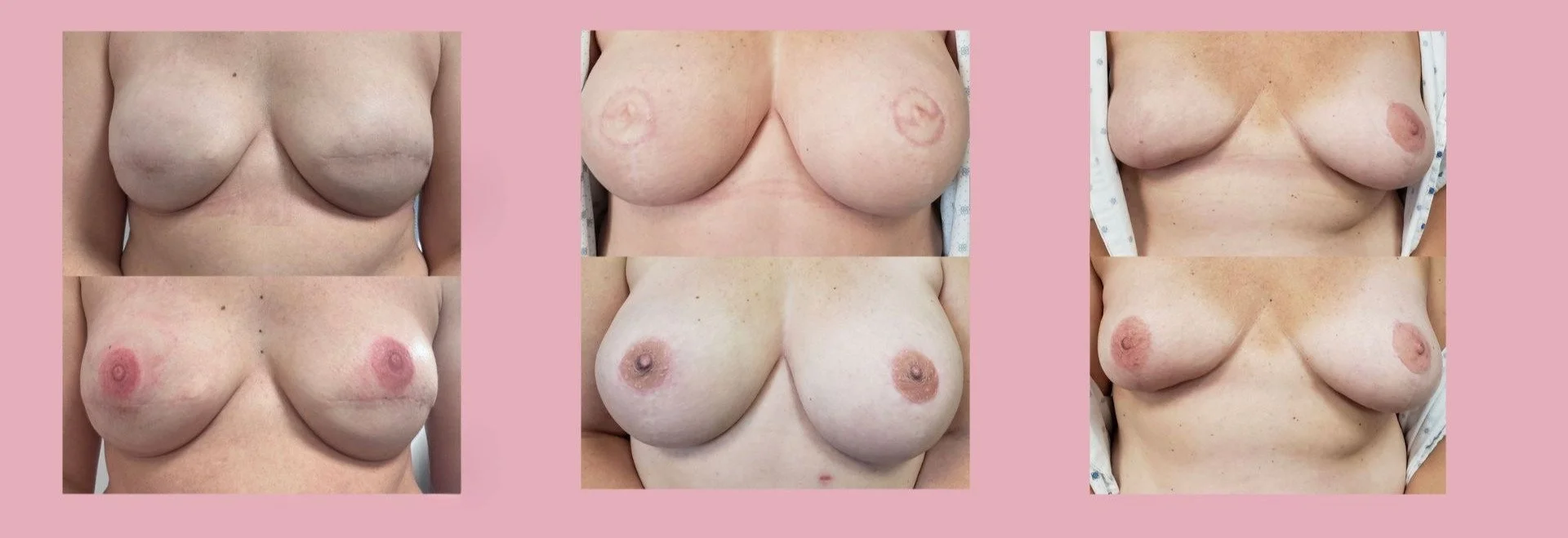
3. 3D Areola Tattoos Can Look Incredibly Realistic
One of the most emotional moments for many clients is seeing their healed areola tattoo for the first time.
Using advanced color matching, shading, and dimension techniques, a 3D areola tattoo can recreate the appearance of a natural nipple and areola complex without additional surgery.
For many breast cancer survivors, this final step feels less about aesthetics and more about restoration and closure.
4. Decorative Mastectomy Tattoos Are Equally Meaningful
Not everyone wants realistic nipple or areola restoration.
Some clients choose floral designs, ornamental work, fine-line tattoos, or custom artwork that celebrates their journey while helping them reclaim ownership of their body.
A mastectomy tattoo can be restorative whether it recreates something that was lost or transforms scars into something entirely new.
5. Healing Takes Time
One of the most common questions I receive is:
"When can I get tattooed?"
The answer depends on your individual healing process.
Most surgeons recommend waiting until surgical scars are fully healed before pursuing restorative tattooing. Healthy, stable tissue typically produces the best results and reduces the risk of complications.
At Luxe Paramedical Tattoo, complimentary consultations allow us to assess your skin, discuss your goals, and determine when the timing is right.
6. Radiation Can Affect Healing and Pigment Retention
Radiation therapy can change the way skin responds to tattooing.
Some clients experience slower healing, increased sensitivity, or uneven pigment retention. Additional sessions may sometimes be necessary to achieve the desired result.
This is completely normal and does not mean the procedure was unsuccessful. Every body heals differently, and restorative tattooing is often a process rather than a single appointment.
7. The Experience Can Be More Emotional Than Expected
Many clients are surprised by how emotional the appointment feels.
For some, it represents closure after years of treatment.
For others, it marks the moment they stop seeing themselves as a patient and start seeing themselves as a person again.
Sometimes the emotions arrive during the appointment. Sometimes they arrive when they look in the mirror weeks later.
Either way, those moments matter.
8. Top Surgery Tattooing Is Becoming Increasingly Popular
Restorative tattooing is not exclusively for breast cancer survivors.
Many transgender and nonbinary individuals seek gender-affirming tattoo services after top surgery. Some choose scar camouflage treatments, while others pursue decorative chest pieces that complement their transition and personal style.
Gender-affirming tattooing can be a meaningful part of self-expression, confidence, and body reclamation.
9. Choosing the Right Artist Matters
This work is deeply personal.
Technical skill is important, but so is finding someone who makes you feel safe, heard, and respected throughout the process.
When researching a mastectomy tattoo artist, areola tattoo specialist, or gender-affirming tattoo provider in Pittsburgh, look for someone who understands both the physical and emotional aspects of restorative tattooing.
You deserve an experience built on trust, empathy, and expertise.
10. You Deserve to Feel Like Yourself Again
A mastectomy tattoo isn't about erasing your story.
It's about honoring it.
Whether you choose a realistic nipple tattoo, areola restoration, scar camouflage, decorative artwork, or gender-affirming tattooing, the goal is the same: helping you feel more comfortable, confident, and connected to your body.
Your scars tell a story of survival.
Your tattoo can become part of that story too.
Considering a Mastectomy Tattoo in Pittsburgh?
If you're researching mastectomy tattoos, 3D areola restoration, nipple tattooing, scar camouflage, or gender-affirming tattoo services in Pittsburgh, you're not alone.
At Luxe Paramedical Tattoo, Natasha Fialkov proudly serves clients throughout Pittsburgh, Wexford, Cranberry Township, Sewickley, Monroeville, Greensburg, South Hills, and surrounding Western Pennsylvania communities.
Schedule a complimentary consultation to discuss your goals, ask questions, and explore whether restorative tattooing is the right next step in your healing journey.